
A Guide to Renting Flexible Lab Space in the UK
A Guide to Renting Flexible Lab Space in the UK
Flexible Lab Spaces Overview
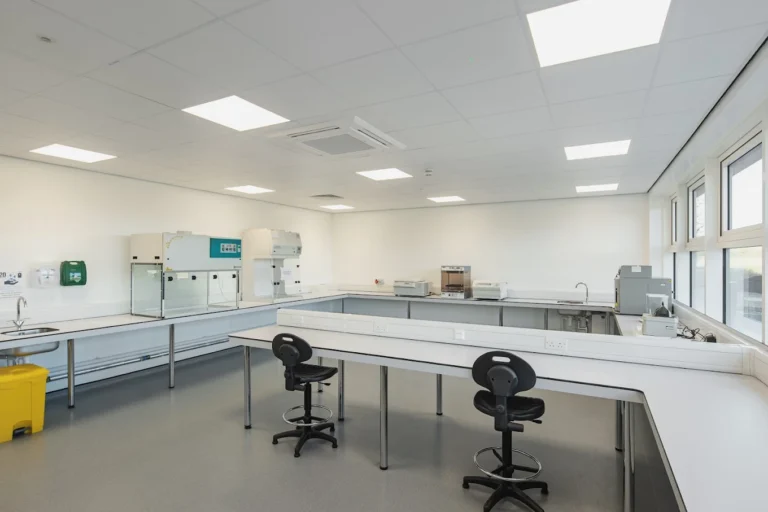
The UK’s life sciences sector is one of the most advanced and innovative in the world, creating strong demand for flexible laboratory space, research facilities and specialist science environments. From biotechnology startups and pharmaceutical companies to university spin-outs and healthcare innovators, organisations increasingly choose to rent lab space rather than invest in costly bespoke facilities.
Flexible lab space offers growing businesses access to specialist infrastructure, scientific equipment and professional research environments without the significant capital expenditure associated with developing a laboratory from scratch.
Whether you’re developing new medicines, conducting product testing, advancing medical technologies or commercialising scientific research, flexible laboratory space provides a practical route to expansion.


What Is Flexible Lab Space?
Flexible lab space refers to laboratory facilities available on adaptable rental agreements rather than traditional long-term property leases. These environments are specifically designed for scientific research, product development, testing, experimentation and innovation.
Unlike conventional office space, laboratories require specialist infrastructure, including ventilation systems, drainage, chemical handling facilities and controlled environments.
The key benefit of renting flexible laboratory space is the ability to occupy fully operational facilities while maintaining flexibility as your organisation grows.
Types of Lab Space
Not all laboratories are the same. Businesses should understand the different types of facilities available before choosing the right environment.
Wet Labs
Wet labs are designed for scientific work involving liquids, chemicals, biological materials and laboratory experimentation.
Common wet lab features include:
- Laboratory benches
- Fume cupboards
- Water and drainage systems
- Chemical storage
- Waste management facilities
- Specialist ventilation systems
- Controlled environments
- Laboratory-grade utilities
Wet labs are commonly used by:
- Biotechnology companies
- Pharmaceutical organisations
- Healthcare innovators
- Medical research teams
- Diagnostics businesses
- Environmental testing companies
- Life science startups
Dry Labs
Dry labs focus on analysis, computing and research activities that do not require chemicals or biological materials.
Typical facilities include:
- Office-style research space
- High-performance computing infrastructure
- Data analysis workstations
- Software development environments
- Collaboration areas
- Research offices
- Meeting facilities
Dry labs are often occupied by:
- Health technology businesses
- Artificial intelligence companies
- Bioinformatics teams
- Data science organisations
- Medical software developers
- Engineering firms
- Academic researchers
Many science parks and innovation campuses offer a combination of wet and dry laboratories, allowing organisations to integrate research, development and commercial activities.
Understanding Laboratory Classifications
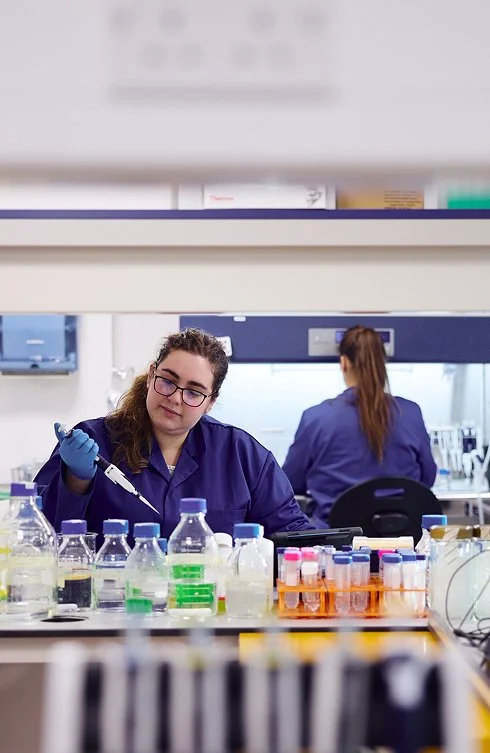
Laboratories are often categorised according to the type of scientific work they support.
Life Sciences Laboratories
These facilities are used for biological, biomedical and pharmaceutical research.
Research and Development Labs
Designed for product innovation, prototyping and scientific research.
Analytical Laboratories
Used for testing, quality control and scientific analysis across industries.
Clinical and Healthcare Laboratories
Supporting diagnostics, medical research and healthcare innovation.
Engineering and Technology Labs
Popular with advanced manufacturing, robotics and materials science businesses.
The specific classification required will depend on your operational activities and regulatory obligations.
CL1 Laboratories (Containment Level 1)
CL1 laboratories are designed for research involving biological agents that pose little or no risk to human health.
CL2 Laboratories (Containment Level 2)
CL2 laboratories are designed for work involving biological agents that may pose a moderate risk to human health but are unlikely to spread widely through the community.
CL3 Laboratories (Containment Level 3)
CL3 laboratories support research involving potentially serious biological hazards that require strict containment procedures.
These facilities are typically used by:
- Pharmaceutical companies
- Vaccine developers
- Government agencies
- Specialist research institutes
- Advanced healthcare research organisations
CL4 Laboratories (Containment Level 4)
CL4 laboratories represent the highest level of biological containment.
These facilities are extremely specialised and generally found within government, defence and advanced scientific research institutions.
Features include:
- Maximum containment controls
- Full isolation systems
- Specialist protective equipment
- Highly restricted access
Most commercial occupiers seeking to rent lab space will not require CL4 facilities.
Who Rents Laboratory Space?
The demand for flexible laboratory space continues to grow across multiple sectors.
Organisations frequently seeking lab space include:
- Biotechnology startups
- Pharmaceutical companies
- University spin-outs
- Medical technology firms
- Health technology businesses
- Research institutes
- Genomics companies
- Environmental consultancies
- Chemical engineering businesses
- Advanced manufacturing companies
- Artificial intelligence organisations
- Diagnostics providers
Many occupiers begin with small laboratory suites before expanding into larger facilities as funding and research programmes develop.
Why Rent Lab Space Instead of Building Your Own?
Creating a purpose-built laboratory can be expensive and time-consuming.
Laboratory fit-outs often require:
- Specialist mechanical systems
- Ventilation infrastructure
- Laboratory furniture
- Regulatory compliance
- Health and safety systems
- Utility upgrades
- Environmental controls
Renting flexible laboratory space allows businesses to access these facilities immediately while preserving capital for research, staffing and commercialisation activities.
Advantages include:
- Faster routes to market
- Reduced capital expenditure
- Greater flexibility
- Easier scaling
- Access to specialist communities
- Professional support services
Top UK Locations for Flexible Lab Space
Cambridge
Cambridge is widely recognised as the UK’s leading life sciences cluster and one of Europe’s most significant biotechnology hubs. The region benefits from world-class universities, research institutions and science parks, attracting substantial levels of investment and innovation. The area contains one of Europe’s largest biotechnology ecosystems and a dense concentration of life science companies. [cambridgeand.com], [incertbio.com]
Businesses choosing Cambridge benefit from:
- Strong venture capital activity
- Extensive science infrastructure
- Skilled scientific talent
- Global reputation
- Research collaboration opportunities
Oxfordshire
Oxfordshire forms a key part of the UK’s internationally recognised life sciences ecosystem, often referred to as the Golden Triangle. The region combines academic excellence, cutting-edge research and strong commercialisation activity. Demand for laboratory accommodation continues to grow due to the concentration of science and technology businesses. [nufuture.co.uk], [incertbio.com]
Popular sectors include:
- Biotechnology
- Pharmaceuticals
- Health technology
- Drug discovery
- Advanced research
Greater Manchester
Manchester has emerged as one of the UK’s fastest-growing science and innovation centres. The city combines research expertise, university partnerships and expanding life sciences infrastructure.
Strengths include:
- Genomics
- Oncology
- Digital health
- Medical technology
- Advanced manufacturing
Life sciences investment and innovation activity continue to increase throughout the Greater Manchester region. [linkedin.com], [incertbio.com]
Edinburgh
Edinburgh is a major component of Scotland’s life sciences sector and continues to attract research organisations, university spin-outs and health innovation businesses.
The city offers:
- Strong academic institutions
- Research excellence
- Growing innovation districts
- Access to specialist talent
- Established science parks
The wider Edinburgh region remains one of the UK’s most important centres for health innovation and scientific research. [linkedin.com], [innovation…sit.gov.uk]
Alderley Park
Alderley Park in Cheshire has become one of the UK’s leading bioscience and pharmaceutical clusters. The area supports a large community of life science businesses and offers a range of specialist laboratory environments.
The location attracts:
- Biotech startups
- Pharmaceutical companies
- Research organisations
- Drug development businesses
- Healthcare innovators
Its position within the North West life sciences ecosystem continues to support growth and investment.
Enquire about availability at Alderley Park
Find Flexible Lab Space with Your Flex Expert
Finding the right laboratory environment can be challenging, particularly when balancing scientific requirements, costs, location and future growth plans.
Your Flex Expert helps businesses identify and compare flexible laboratory space across the UK’s leading science and innovation hubs. Whether you’re searching for wet labs, dry labs, R&D space or specialist life sciences facilities in Cambridge, Oxfordshire, Manchester, Edinburgh or Alderley Park, we can help simplify the search process.
Tell us about your project, team size and laboratory requirements, and we’ll help you find the right flexible lab space to support your next stage of growth.
FAQ
What is flexible lab space?
What is the difference between a wet lab and a dry lab?
What do CL1, CL2 and CL3 laboratory classifications mean?
Laboratory classifications relate to biological containment levels:
- CL1 laboratories are used for low-risk biological research and educational activities.
- CL2 laboratories support work involving moderate-risk biological agents and are commonly used by biotechnology, pharmaceutical and diagnostics companies.
- CL3 laboratories are specialist facilities designed for research involving potentially serious biological hazards and require enhanced containment measures.
Most commercial occupiers looking to rent lab space will typically require CL1 or CL2 facilities.
How much does it cost to rent lab space in the UK?
Which UK locations are best for renting aboratory space?
Some of the UK’s leading life science and laboratory property markets include:
- Cambridge
- Oxfordshire
- Greater Manchester
- Edinburgh
- Alderley Park
- London
These locations benefit from world-class universities, research institutions, skilled talent pools and strong investment ecosystems, making them popular destinations for biotechnology, pharmaceutical and research businesses.
Who typically rents flexible laboratory space?
Flexible laboratory space is used by a wide range of organisations, including:
- Biotechnology companies
- Pharmaceutical firms
- Medical technology businesses
- University spin-outs
- Healthcare innovators
- Research organisations
- Genomics companies
- Diagnostics providers
- Environmental science businesses
- Advanced manufacturing firms
Many occupiers start with small laboratory suites before expanding into larger facilities as their business grows.
What should I consider before renting lab space?
Before choosing laboratory space, consider:
- Containment level requirements (CL1, CL2 or CL3)
- Wet lab or dry lab requirements
- Future expansion potential
- Access to scientific talent
- Proximity to universities and research centres
- Transport links for staff and suppliers
- Utility and infrastructure requirements
- Regulatory compliance standards
- Total occupancy costs beyond rent
Choosing the right laboratory environment can significantly influence research efficiency, recruitment, collaboration opportunities and long-term business growth.
Can I List My Flexible Lab Space with Your Flex Expert?
es. Listing your flexible laboratory space with Your Flex Expert is completely free.
We help connect life sciences occupiers, biotechnology companies, university spin-outs, pharmaceutical businesses and research organisations with available lab space across the UK and Ireland. Whether you have wet labs, dry labs, CL2 facilities, innovation space or specialist research accommodation, we can promote your availability to active occupiers searching for laboratory space.
There are:
- No upfront listing fees
- No subscription costs
- No advertising charges
- No long-term commitments
We only earn a fee when we successfully introduce and place an occupier into your available laboratory space.
This performance-based approach means our interests are aligned with yours. We focus on generating qualified enquiries and helping landlords, science parks, innovation campuses and laboratory operators fill vacant space as quickly as possible.
If you have flexible lab space available to rent, contact Your Flex Expert today to discuss a free listing and start reaching potential occupiers actively searching for laboratory space.